


.svg)


How to Customize Your Child's Hearing Aids: Colors, Stickers, and Earmold Designs
Hearing aids don't have to be plain. Here's how we customize our daughter's devices — and why it keeps her interested in wearing them.
Why Making Hearing Aids Personal Matters
Hearing aids are part of daily life for our daughter, and we want them to feel like her devices, not just medical equipment. Personalization is a surprisingly powerful tool for that.
Stickers, skins, sparkle earmolds, and tube charms won't change how the devices perform. But they do change how our children relate to them. When your daughter picks the mermaid skin or the airplane earmolds, she's making a choice about something that belongs to her. That ownership is a small, early step toward the self-advocacy she'll build over time.
Here are the four customization options we've explored with our daughter's Phonak Sky Marvel hearing aids.
Stickers and “Skins”
Our Phonak hearing aids came with a sticker kit!
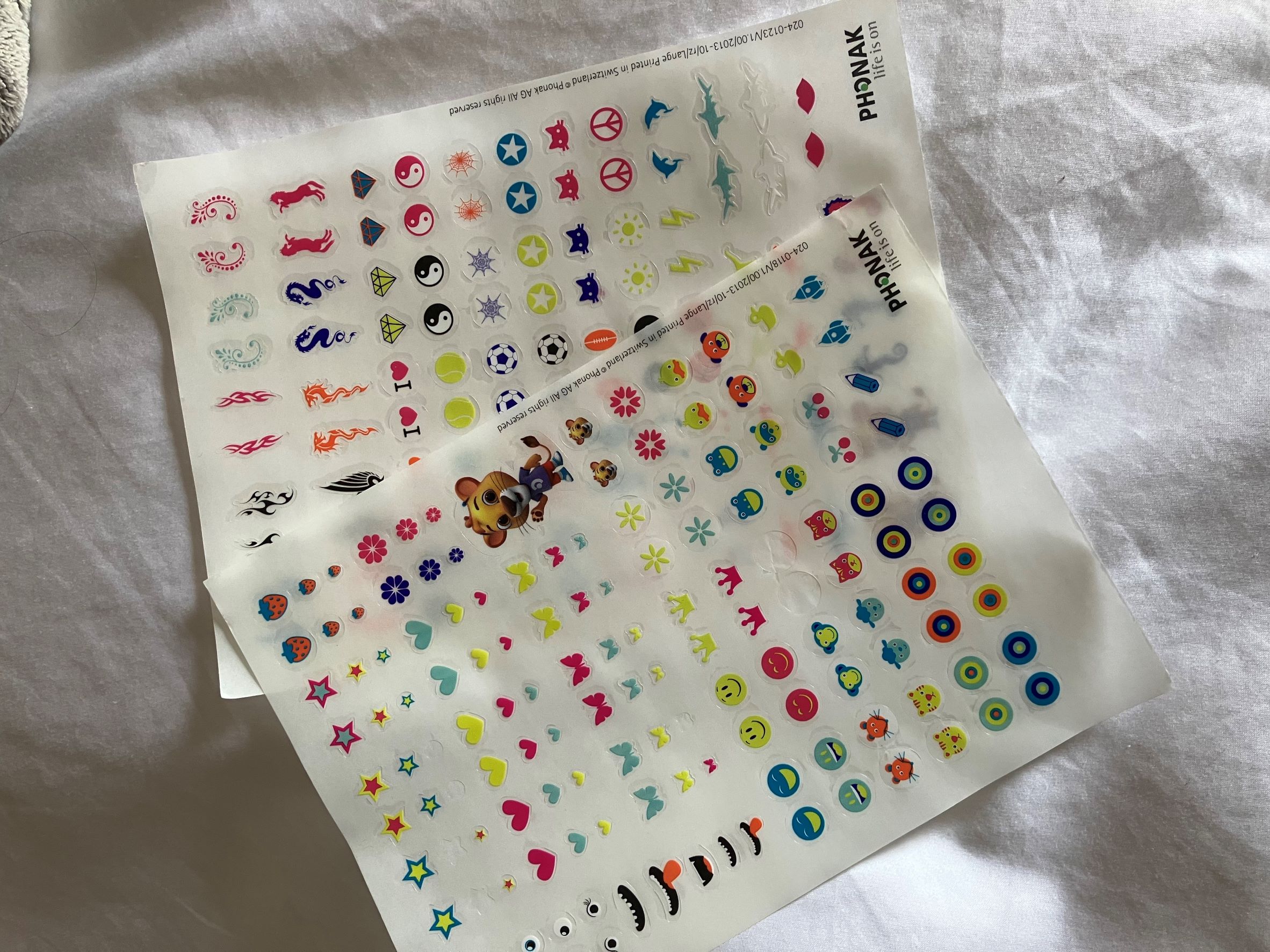
There's something for every style. We used a few for fun early on (the pig was soooo cute).
The stickers are nice because they come off easily, and don't leave a sticky residue. We can't wait to use hearing aid stickers for real once our toddler's past the sticker-eating age!
We can't wait to use hearing aid stickers for real once our toddler's past the sticker-eating age!
Larger stickers that cover the device are called skins. There's a ton on Etsy in basically every color and theme imaginable, for a wide range of devices. (Read more here about why we chose colorful hearing devices!)
Swap the Earhooks
The earhook is the hard plastic piece that hangs over the ear.
On our hearing aids, the "hook" is the blue piece:
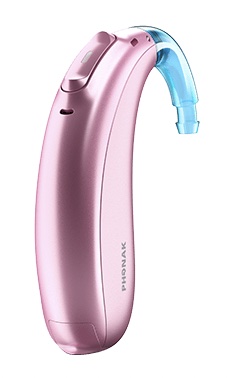
We got the blue hooks directly from our audiologist. She also gave us a pink set so we can swap the color!
In our personal experience, audiologists tend to have extra earhooks on hand for hearing aids they dispense and service.
We also prefer to have our audiologist change the earhooks during office visits, since our pediatric hearing aids have a locking mechanism and may require a tool to open it. We leave that to the experts!
We've noticed various earhooks for sale on eBay and Amazon, but highly recommend talking with your audiologist first.
Tubes & Charms
The tubes are the flexible, thin pieces that connect the molds to the hooks.
Our baby's hearing aid tubes are clear and plain, but we might want to change it up in the future!
We could see a kid loving these twisty tube covers.


And, how cute are the device charms?
We'll wait on charms until she's older—for choking concerns and comfort. But. My heart. They're SO cute.

Design Your Earmolds
We love planning our next earmold colors in advance! Colorful earmolds with fun designs are a great complement to bright and colorful hearing aids.
Different doctors have different options. Once we know where our next molds are coming from, we get to work!
- What's seasonal?
- What's she into these days?
- Should we do a transparent color with glitter?
- Should we do 2 colors swirled, with an image?
- Stripes?
- Polkadots?
- All of the above???? (okay, not possible, but we can dream)
We like to write down our choices to make sure we get it right!
Our recent molds have airplanes soaring through a sparkling sky:
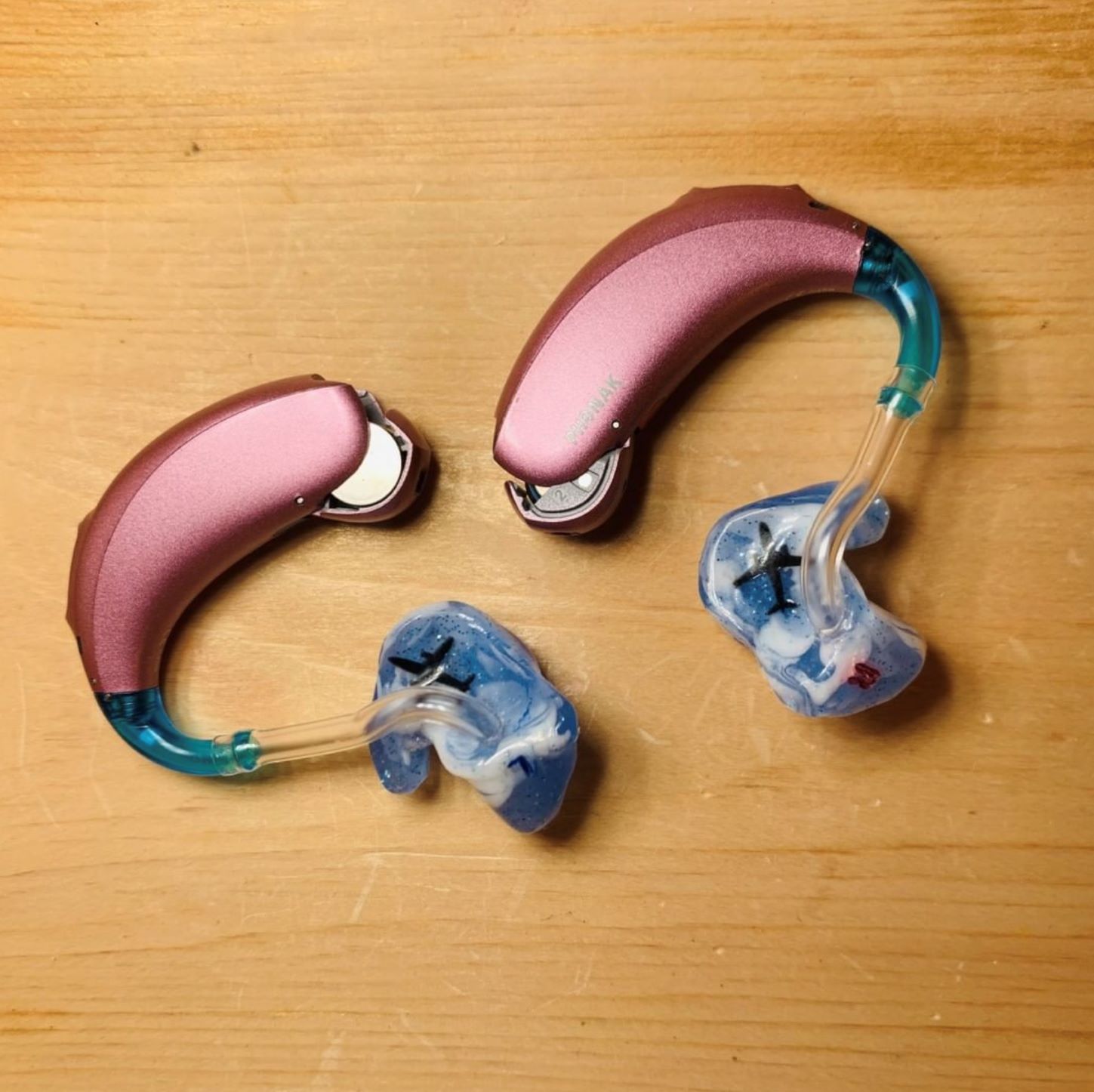
We are obsessed.
When the babies are little, we get new molds so frequently that this is a pretty "temporary" change!
Every time we planned a new set of baby earmolds, it became its own little ritual—what's she into right now? What colors does she keep reaching for? These little decisions feel like the beginning of something bigger. She's learning, in the smallest way, that her hearing aids are hers.
A Note Before You Start
Check with your audiologist before you add stickers, swap earhooks, or modify anything on a hearing device. Some modifications can affect retention or warranties. Our audiologist has been a great resource: she's the one who gave us our extra earhooks.
We're hearing loss parents, not clinicians. Everything here is what's worked for us. Your mileage may vary, especially depending on device type, your child's age, and your medical team's recommendations.


